Video Call
- 4.0
- Rating
- 10.00M
- Installs
- Free
- Price

 Analysis by App-foxy
I found Video Call most useful when I wanted a straightforward way to speak face to face without turning the experience into a lesson about settings, accounts, or complicated meeting controls. It is a communication app from FORBIS s.r.o. for Android smartphones and tablets, and its central purpose is easy to understand: start a video conversation and keep the interaction focused on the people involved. That simplicity is its strongest quality, but it also means the app is better suited to personal calls than to users looking for a complete workplace-meeting platform.
After spending time with it, I would describe it as a practical option for relatives, friends, and small personal conversations. The app is free to install, available to users rated Everyone, and supports devices running Android 6.0 or later. Its current version is 1.5.6, while the project itself has been available since August 3, 2016. Those details matter because the app is not aimed only at people with the newest phones; it can fit into a mixed-device household where upgrading is not always possible.
How readable and manageable the experience feels
I find readability is only useful when it makes a call easier to repeat, not merely easier to start once. In this section, I look at how a caller can reduce small points of friction—choosing a steady phone position, agreeing on a familiar routine, and checking comfort before an important conversation—so the app remains manageable beyond the first attempt. That practical test leads naturally to where it earns a place in daily life.
You May Also Like

 Blood Strike: 2.5 Anniversary
Blood Strike’s Loadouts Turn Every Drop Into a Tactical Gamble
A close look at Blood Strike’s custom loadouts: how fast access to signature weapons reshapes its battle royale rhythm, rewards preparation, and narrows the gap between fights.

 Pandora - Music & Podcasts
Pandora’s Music Is Easy to Start, but Harder to Recover
Pandora’s strength is its low-effort path from a seed to a station. Its weak spot is how much confidence it asks you to place in connection, setup, and quiet recovery.

 8 Ball Pool
 Is Built on Rivalries, Rematches, and Routine
A close look at the rivalries, rematches, shared routines, and unanswered safety questions that turn a quick pool match into a persistent mobile community.

 Samsung Music
’s Quiet Strength Is Playing What You Already Own
Its reach comes less from spectacle than from dependable access to a personal library. That simplicity is both the app’s strongest retention engine and its ceiling.

 AccuWeather: Weather Radar
AccuWeather Review: A Quick, Clear Forecast for Everyday Decisions
For everyday plans, the best forecast is the one you can understand quickly. AccuWeather makes rain timing, radar, and local conditions easy to act on, with a few trade-offs.

 Hill Climb Racing
Why Hill Climb Racing Still Turns Crashes Into One More Run
A tiny car, a bumpy hill and one more upgrade: Hill Climb Racing keeps resurfacing because its simple chaos makes every near-miss feel personal.
More From Our News Desk



A focused interface helps first-time callers
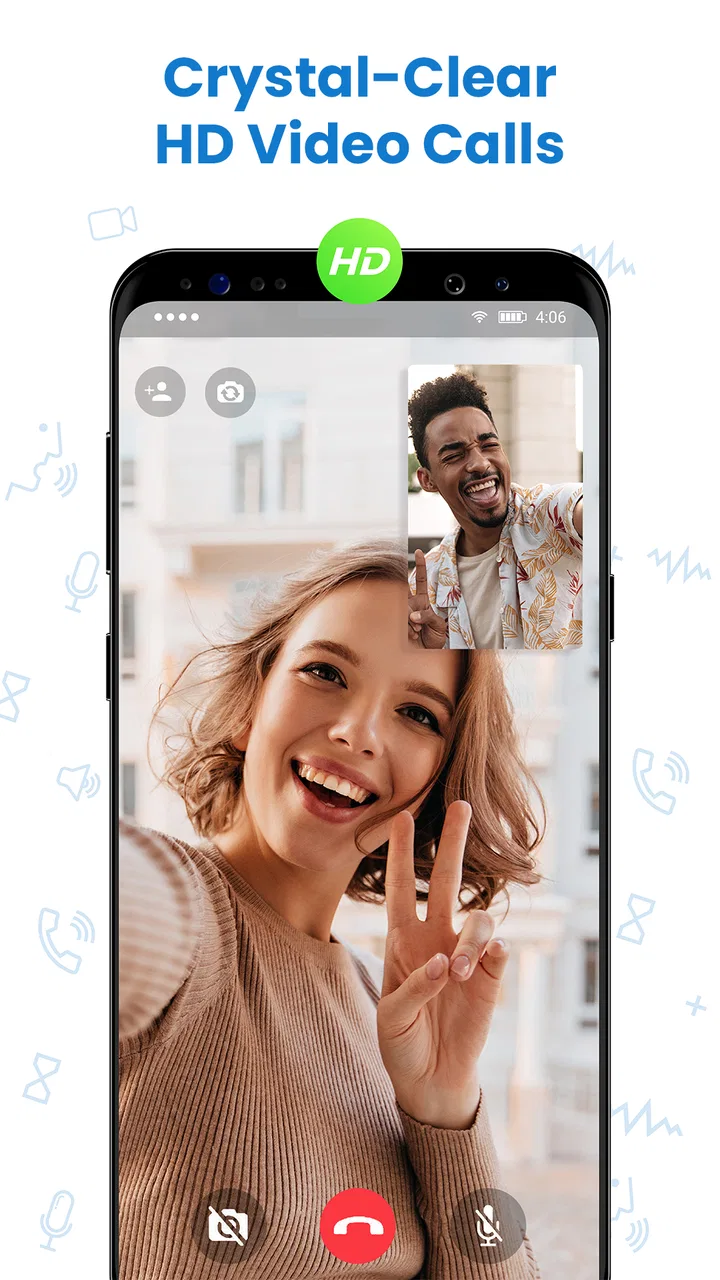
The first thing I appreciated is that Video Call does not make its purpose mysterious. The short description is simply “Video Call,” and the app follows that direct idea rather than presenting itself as a crowded social network or a full collaboration suite. For someone who finds feature-heavy communication tools tiring, that narrower focus can make the first attempt less intimidating.
In everyday use, I would expect the main challenge to be understanding the call flow rather than learning a large collection of tools. That is important for older relatives or anyone who rarely uses video communication. A person helping another user remotely can explain the basic sequence in ordinary language: open the app, find the person, begin the call, and use the visible call controls. The fewer concepts involved, the easier it is to remember the process next time.
Readability is not only about the size of letters. It is also about whether the screen asks the user to make too many decisions at once. Video Call benefits from having a single obvious job. If I were preparing it for a family member, I would first make a short practice call while both people are calm, then agree on where the phone should be placed. That small rehearsal is more useful than trying to explain every possible situation during an urgent call.
Useful simplicity has a limit
The same focused design can feel restrictive to people who want richer controls. Users accustomed to services such as Zoom, Google Meet, or WhatsApp may miss the broader ecosystem those alternatives provide, including established group-work habits, messaging histories, file sharing, or meeting-oriented tools. Video Call makes more sense when the conversation itself is the priority, not when the call is one part of a larger project.
I also would not choose it solely because the word “secure” appears in its store summary. A reassuring description is not a substitute for checking the app’s current behavior, permissions, and privacy choices on the device. For a casual family conversation, that may be a reasonable level of attention. For confidential professional discussions, I would compare the app’s privacy information with the requirements of the organization before making it the default.
Helping someone who struggles with navigation
One practical advantage of a simple calling app is that a helper can create a repeatable routine. Keep the app in a predictable place on the home screen, save the intended contact in the same way each time, and avoid changing several device settings before a call. This is especially helpful for users with memory difficulties or limited experience with touchscreens.
I would also recommend separating setup from conversation. Before calling, check that the phone has enough battery, that the user is sitting somewhere stable, and that the front camera is not covered. Once the call begins, avoid asking the person to search through menus while they are already trying to listen and speak. That workflow is not a special feature of the app, but Video Call’s uncomplicated purpose makes it easier to build around.
Text, contrast, and visual comfort
People with reduced vision may find a direct interface easier than a screen packed with small icons, but I would not assume that every user will find the controls comfortable. The actual experience depends on the phone’s display, system text settings, lighting, and the user’s vision. Someone who needs very large controls, strong contrast, or spoken guidance should test the app on their own device rather than relying on the general impression of simplicity.
A useful habit is to test a call in the same room where it will normally happen. Glare from a window can make controls harder to see, while a dark room can make the other person’s face difficult to interpret. Placing the phone on a stand also reduces the need to hold it and keeps the image steadier. These small environmental adjustments often improve accessibility more than repeatedly tapping the screen.
Motor and sensory considerations
Video conversations can be tiring for people with limited hand movement, tremors, joint pain, or difficulty maintaining a fixed grip. The phone does not need to be held throughout the call if it can rest securely on a table or stand. I would position it before connecting, leave enough space around it, and make sure the user can reach the basic call controls without stretching or repeatedly repositioning the device.
That arrangement also helps users who become uncomfortable when the camera moves constantly. A stable image is easier to follow, especially for someone with visual processing difficulties or sensitivity to motion. It can be useful to place the phone at eye level rather than flat on a table, because the other person’s face then appears more naturally and the caller does not need to lean forward to be seen.
Hearing needs deserve equal attention. Video Call is most useful when both people can hear one another clearly, but the quality of a conversation depends on the phone, surroundings, and connection as well as the app. A quiet room, reduced background noise, and a short sound check before an important call can prevent frustration. If a user relies on a specific hearing aid setup, headset, or other assistive arrangement, compatibility should be tested in advance rather than assumed.
For people who cannot comfortably speak, the value of a video call may depend on whether they can communicate through another method while connected. Video Call is not the right choice if the user needs a mature text-chat workflow, extensive live captions, or specialized communication support as a central part of the conversation. In that case, an alternative designed around those needs may be more suitable, even if its interface is more complicated.
Using the app with different communication styles
Video is helpful when facial expressions, gestures, or lip movements add meaning. It can support a grandparent who wants to see a child, a friend who needs to demonstrate a small repair, or a family member who communicates partly through visual cues. I found that the camera changes the rhythm of a conversation: people can point, nod, and show an object instead of describing everything verbally.
At the same time, not every user wants to be on camera. Some people feel self-conscious, some have limited energy, and others may be in a setting where showing their surroundings is uncomfortable. A conventional voice call or text message can be the better option in those moments. The most inclusive approach is to treat video as an invitation, not an obligation.
Where Video Call fits in real situations
A simple calling routine can be valuable in very different situations, from keeping in touch with a relative to showing someone an object that is difficult to describe over the phone. I weigh those personal uses against moments when a live camera conversation adds pressure or when a more structured service would serve people better. The situations that follow help clarify whether Video Call deserves a regular place in someone’s routine.
A realistic family routine
Imagine a relative who lives alone and finds multi-purpose messaging apps confusing. A family member can install Video Call on a compatible Android phone, practice once, and establish a regular check-in. Before the call, the relative places the phone on a stable surface near a lamp, opens the app, and waits for the familiar contact. The conversation can then focus on health, errands, or simple companionship instead of troubleshooting.
This scenario shows why the app’s narrow purpose is valuable. The user does not need to understand channels, meeting rooms, invitations, or document sharing. A helper can also keep the routine consistent from week to week. The trade-off is that the arrangement may not satisfy a family that wants a shared group calendar, long message history, or many participants with different roles.
Remote support and visual demonstrations
I can also see Video Call working well for informal remote assistance. Someone can show a family member how a household device is connected, point a camera toward a plant that needs attention, or demonstrate where a switch is located. This is more efficient than trying to describe every detail by voice.
For this kind of use, camera placement matters more than advanced software. The caller should prepare the object before starting, keep the lens clean, and move slowly when showing details. If the person receiving help has difficulty following rapid visual changes, narrate each step and pause between actions. The app can carry the conversation, but the people involved still need to adapt their pace.
When a different app is the wiser choice
Video Call is not my first recommendation for formal meetings, classes, interviews, or large group events. Those situations often benefit from scheduling, participant management, screen sharing, chat moderation, recording controls, or organization-wide administration. Established meeting platforms are generally better when several people must coordinate around a shared agenda.
I would also look elsewhere for a user whose main need is asynchronous communication. If someone cannot answer at a particular time, a messaging service with voice notes and persistent conversation history may be more practical. Video Call favors a live exchange, so it works best when both sides can be available together.
There is also a cost consideration beyond the app’s free download. In-app purchases range from $3.49 to $18.99 per item, so I would review any purchase prompt carefully before approving it, especially on a device used by a child or by someone who may tap through unfamiliar screens. The age rating is Everyone, but that does not remove the need for sensible supervision around purchases and contact choices.
What the adoption numbers suggest—and what they do not
Video Call has reached over 10 million installs and holds a 4.0 average from around 33 thousand ratings, with roughly 1.1 thousand written reviews. That level of use tells me it is not an obscure experiment, and the rating suggests a generally workable experience rather than universal approval. I would read those figures as a reason to try it, not as proof that it will suit every phone, connection, or accessibility need.
The developer, FORBIS s.r.o., has kept the app available across a long period, and the current release is version 1.5.6. For me, the more important question is whether the present version behaves comfortably on the particular device being used. Older hardware, different screen sizes, and changing Android settings can affect how easy a call feels, so a short test with the actual caller is essential.
Remaining barriers to plan around
The biggest barrier is that a video call combines several demands at once: seeing the screen, hearing speech, touching controls, maintaining a connection, and managing the social pressure of being visible. A user may be able to do each task separately but still find the complete experience exhausting. Shorter calls, planned breaks, and a predictable setup can make the difference between a useful tool and an unpleasant one.
Another barrier is dependence on the other caller. If one person has poor lighting, weak audio, or difficulty using the controls, the conversation suffers on both sides. I would agree beforehand on a backup method, such as a normal phone call or text message, so that a failed video connection does not become a crisis. This is particularly important for medical check-ins, travel coordination, or support for someone who lives alone.
Privacy and comfort also need a personal decision. A user may appreciate seeing a familiar face but dislike showing the room behind them. Choosing a neutral background, positioning the phone carefully, and ending the call when the conversation is finished can reduce that discomfort. People who need strict control over recording, participation, or organizational access should investigate alternatives with more explicit management features.
My inclusive verdict
Video Call is at its best when simplicity is itself an accessibility aid. I would recommend it to people who want a direct Android video conversation, especially families supporting someone who finds larger communication platforms overwhelming. Its free entry point, Everyone age rating, broad device compatibility from Android 6.0 onward, and focused purpose make it approachable for ordinary personal calls.
I would not present it as a universal solution for accessibility. Users who need dependable captions, advanced text communication, extensive group controls, formal privacy administration, or highly specialized assistive workflows should compare it with tools built around those requirements. The app can be part of an inclusive routine, but it cannot replace careful device setup, a quiet environment, a stable phone position, and a backup contact method.
My final recommendation is to test it with the person who will actually use it, not only on the reviewer’s phone. Try a short call in the intended room, check whether the controls can be reached comfortably, listen for audio strain, and ask whether being on camera feels acceptable. If that trial feels natural, Video Call offers a refreshingly uncomplicated way to stay visually connected. If the trial exposes needs beyond a basic live conversation, choosing a more feature-rich or accessibility-focused alternative will be the kinder decision.
FAQs for Video Call
01What are the key features of the Video Call app?
The Video Call app offers high-quality video and audio calls, allowing users to connect seamlessly with friends and family. It supports group calls, screen sharing, and has a user-friendly interface. Additionally, it includes fun features like video filters and backgrounds to enhance your call experience.
02Is the Video Call app available for both Android and iOS devices?
Yes, the Video Call app is available for both Android and iOS devices. You can download it from the Google Play Store for Android and the Apple App Store for iOS. The app ensures compatibility with a wide range of devices and operating systems.
03Does the Video Call app require a subscription to use its features?
The Video Call app offers both free and premium subscription options. The free version includes basic features like one-on-one calls and limited group call durations. The premium version unlocks additional features such as longer group calls, HD video quality, and exclusive filters.
04How secure is the Video Call app in terms of privacy and data protection?
The Video Call app prioritizes user privacy and data protection. It employs end-to-end encryption for all calls to ensure your conversations remain private. The app also follows strict data protection policies, not storing or sharing your call data with third parties.
05What should I do if I encounter issues with the Video Call app?
If you experience any issues with the Video Call app, you can access the in-app support feature for troubleshooting tips and FAQs. Additionally, you can contact the customer support team via email or chat for personalized assistance. Regular updates also help resolve common bugs and improve performance.
Pros
- High-quality video resolution for clear calls.
- User-friendly interface for easy navigation.
- Supports group calls with up to 10 participants.
- Low data usage for efficient connectivity.
- Cross-platform compatibility for Android and iOS.
Cons
- Requires a stable internet connection.
- Limited features in the free version.
- Occasional lag in low-bandwidth areas.
- Consumes significant battery during long calls.
- No built-in screen sharing functionality.

Video Call
Gallery